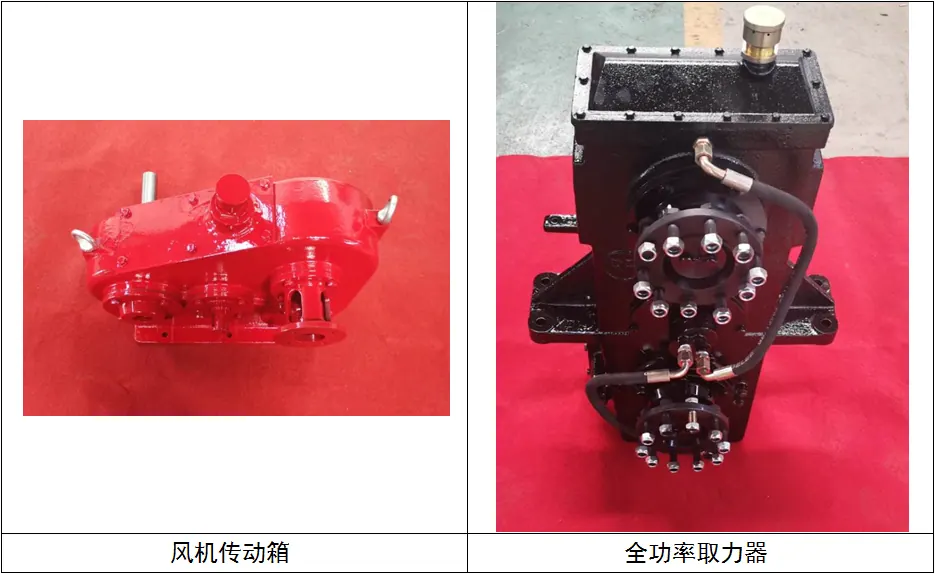
Identify the actual auxiliary function
Describe the pump or other machine driven from the proposed PTO and its required speed, torque and operating schedule. State when that function is needed relative to the main drive. Ask which shaft or gear path provides it and what the supplier includes at the connection. A PTO provision may mean a prepared interface rather than a supplied drive assembly. Keep the auxiliary task and priced hardware visible in the technical comparison.
Provide simultaneous loading cases
List the combinations of main output, auxiliary output and other connected branches that can occur in service. Ask the gearbox designer to state the supported limits for each combination. Separate component maxima should not be added or treated as concurrently available without assessment. Include prime-mover capability and any shared gear or bearing restrictions in the responsible engineering review. The proposal should identify unsupported cases instead of relying on an unexplained total-power headline.
Define clutch engagement and disengaged states
If a clutch is included, provide the required operating transitions and obtain its supported duty from the supplier. Identify the relevant load, speed and repetition cases and any need for further assessment. Do not assume a clutch rated for transmitted torque has unlimited engagement capability. Ask what happens to connected shafts and auxiliaries in the agreed disengaged states, with the operating and control requirements established by the responsible machine designers.
Review shared lubrication and control dependencies
Identify whether an auxiliary drive, oil pump or other supporting service depends on a selected gear, rotation direction or clutch state. A branch that appears mechanically available may not be supported in every operating mode. Include required sensors, actuators, piping and rig-control interfaces in the scope schedule. The supplier should distinguish the transmission assembly from the external services needed to use its PTO or clutch as part of the installed equipment.
Verify the supplied branch configuration
Obtain a drawing and rating schedule identifying the ordered drive paths and the approved operating combinations. Agree appropriate checks of direction, speed, control state and delivered components in the acceptance plan. Retain clutch and PTO component identifiers with the spare-parts records. If the driven auxiliary or its connection changes later, require a review rather than treating the original PTO option as approval for any machine that can be connected to the same flange.
Compare provisions with complete options
Normalize bids that supply only a mounting provision against those including gears, clutch, shaft hardware, controls or a complete auxiliary drive. Identify purchased and purchaser-supplied components separately. If another vendor provides the auxiliary, assign responsibility for confirming the combined operating cases and interfaces. A low option price is not evidence of an equivalent PTO package when one proposal stops at the housing opening and another includes the equipment needed to perform the auxiliary function.
Put these items side by side in the bid review
| Purchase item | Question to resolve | Evidence to request |
|---|---|---|
| Auxiliary duty | What is driven and when? | PTO operating schedule |
| Combined load | Which outputs operate together? | Supported load-combination matrix |
| Option scope | Provision or complete drive? | Priced component and interface list |
Suggested wording for the quotation request
Define the offered PTO and clutch configuration for the attached main and auxiliary duties. State supported simultaneous loads, engagement limits and shared lubrication or control dependencies. Distinguish mounting provisions from complete supplied equipment and identify all external interfaces.
Assess each option within the complete gearbox drive train: prime mover, transmission, couplings, driven equipment, mounting and supporting oil system. Preserve the accepted load schedule and interface drawings when comparing suppliers or approving changes. A component rating should not be treated as proof of the complete installed arrangement. Obtain configuration-specific documents from the responsible designers, and retain the agreed exclusions and verification records with the equipment order. Installation, shifting, testing and maintenance must follow approved equipment instructions and site procedures rather than a procurement comparison.
For the wider equipment scope, consult the Oilfield Transmission Box: Configuration Guide. Use the RFQ checklist to collect the supporting documents before requesting a configuration-specific quotation.
Buyer questions
Can separate output maxima be assumed available simultaneously?
No. Obtain supported combined-load cases for the complete transmission.
Does a PTO provision include the clutch and shaft assembly?
Not necessarily. Require the actual supplied components to be listed.
Background and supplier contact
Power transmission standards and technical publications offers related background, not certification of the equipment in a quotation. Applicability must be checked for the project and destination.
Explore the oilfield transmission box, browse all technical resources, or visit Vance Petroleum for company information. Request a gearbox proposal with the load schedule, interface drawings and required shaft speeds.